01/23/2026
Days Before His Suicide, Hemingway’s Hopeful Note to Sister Immaculata
In 1961, the author inscribed a book for the sister, a nurse who cared for him at the Mayo Clinic. Her copy of “The Old Man and the Sea” is being donated to the Nobel Museum.
Ernest Hemingway, delusional, paranoid, depressed and suicidal, was treated in 1961 at the Mayo Clinic where he was cared for by a team of Catholic nurses led by Sister Immaculata.
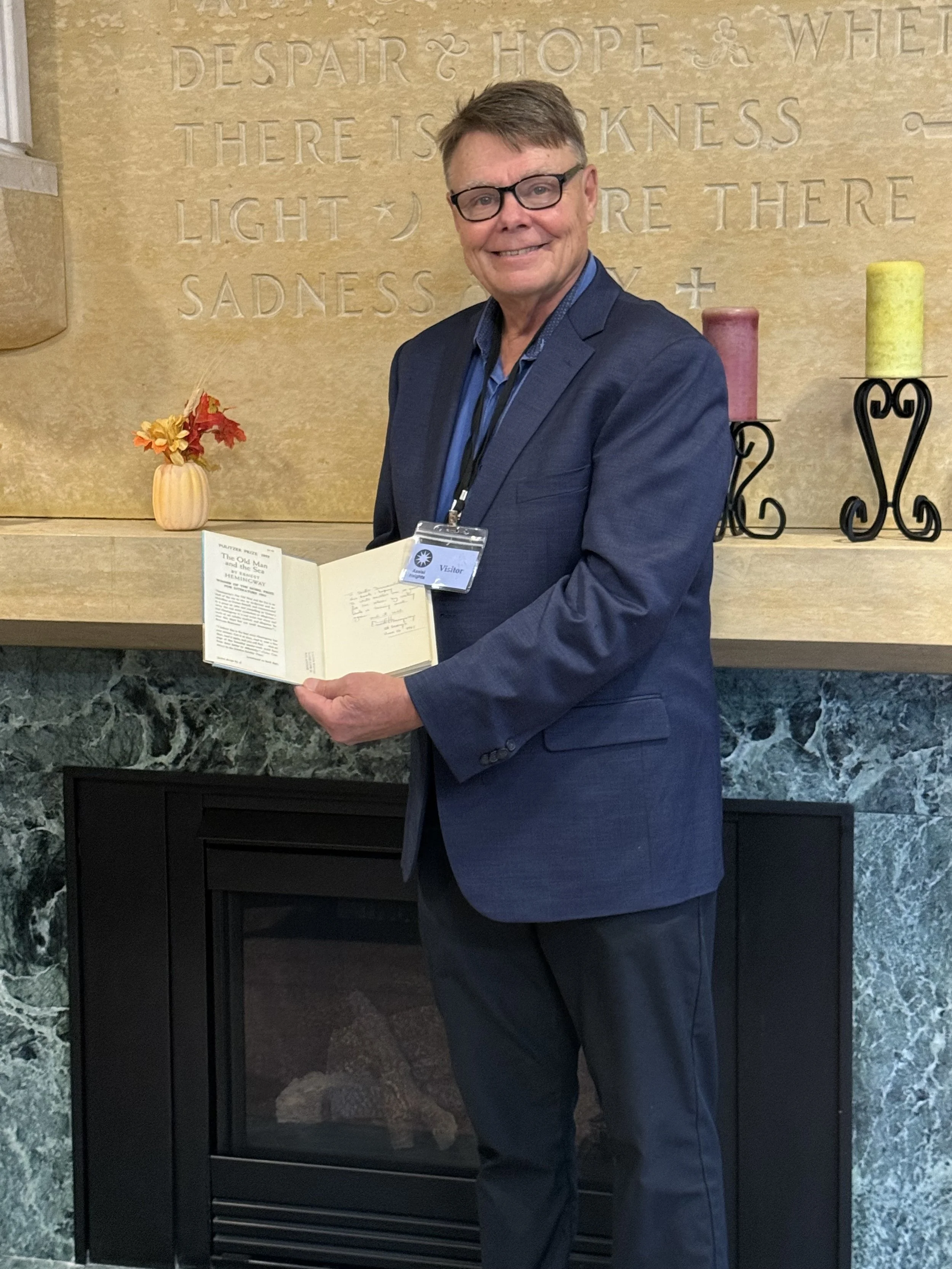
The particulars of their relationship are lost to history, but their connection was close enough to prompt Hemingway, already a literary titan, to give the sister a copy of his acclaimed novella “The Old Man and the Sea,” with a personal, optimistic inscription dated June 16, 1961.
“To Sister Immaculata: this book, happy to write another one as good for her when my writing luck is running well again. and it will.”
Of course, it didn’t. Sixteen days later, on July 2, 1961, Hemingway shot himself at his home in Idaho.
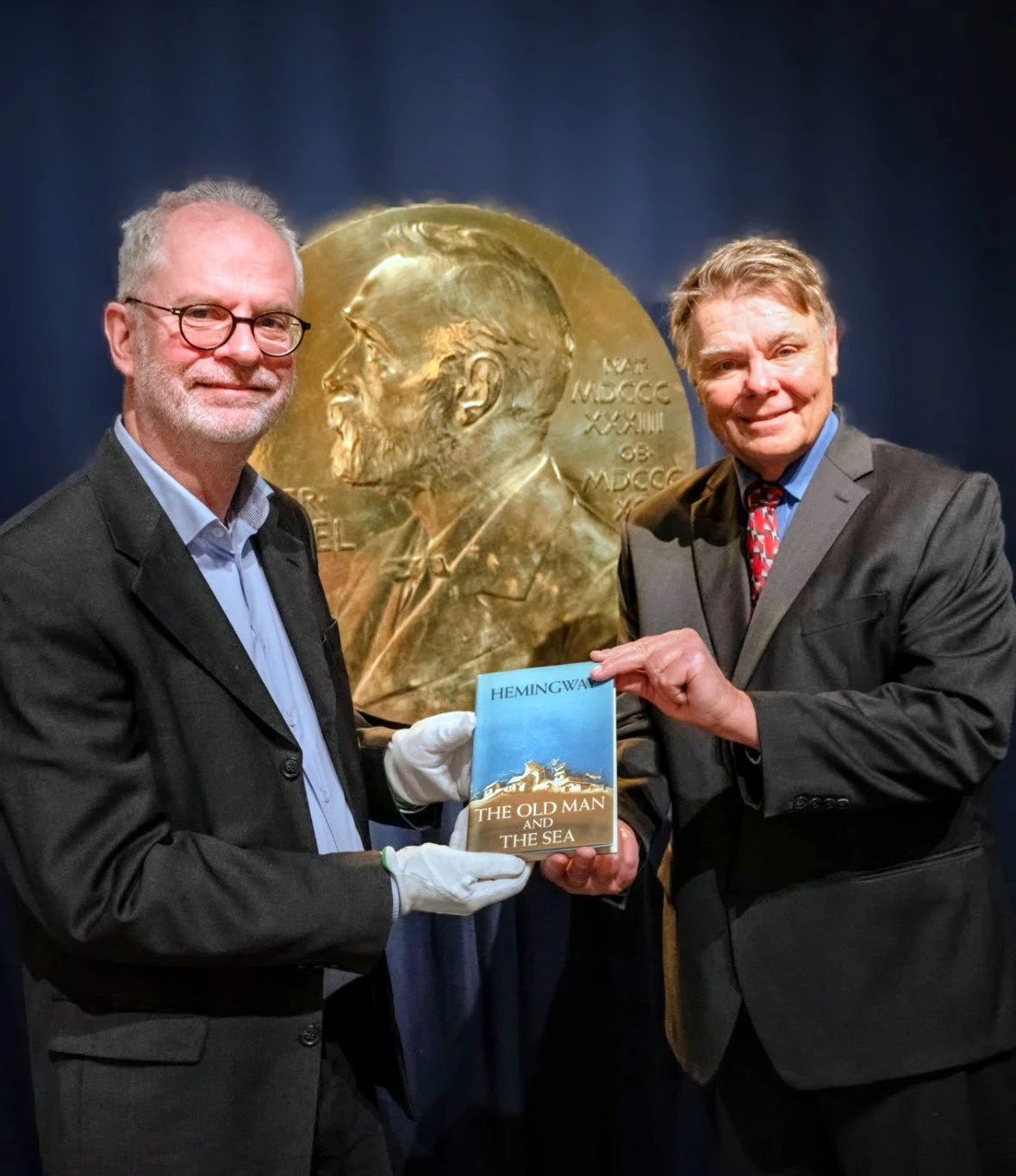
For more than 60 years, the Sisters of Saint Francis of Rochester in Minnesota have shepherded the book, which contains what are thought to be among the last words Hemingway wrote. Now they are donating it to the Nobel Prize Museum in Stockholm, which uses items to animate “the work and the ideas of more than 900 creative minds” of past Nobel Prize recipients, like Hemingway.
The book, which is being turned over Friday in a ceremony in Sweden, is the first Hemingway artifact in the museum.
“This object is a wonderful addition to our collection because it is so dense with stories,” said Ulf Larsson, senior curator at the museum. “If you want to talk about Hemingway’s life and his struggle and his fate, this is the perfect object for it. We will put it on display as soon as possible.”
Leaders of the religious order said that it was time that a larger audience could get to appreciate the book. “It seemed a shame that it’s sitting locked up in a vault at the motherhouse where nobody was ever going to see it,” said Sister Marisa McDonald, OFM, part of the Franciscan order’s leadership council that made the decision.
Though he has only seen photographs of the book and its inscription, Larsson of the museum said he does not doubt the handwriting is authentic. The signature and punctuation tics are consistent with letters Hemingway wrote at the time. Larsson also notes that, since the book is a donation with no money involved, there seems to be no motive for forgery.
Hemingway had been awarded the Nobel Prize in Literature in 1954 and the citation noted his “powerful and pioneering mastery of the art of narrative, most recently demonstrated in ‘The Old Man and the Sea.’”
But by 1960 he was struggling. He had been working on his Paris memoir — which would be published posthumously as “A Moveable Feast” — but was frustrated by his inability to write well. He entered a psychiatric unit in Saint Marys Hospital, affiliated with the Mayo Clinic, in November and stayed almost to the end of January 1961. He received electroshock therapy and returned to the facility in April 1961 for additional care.
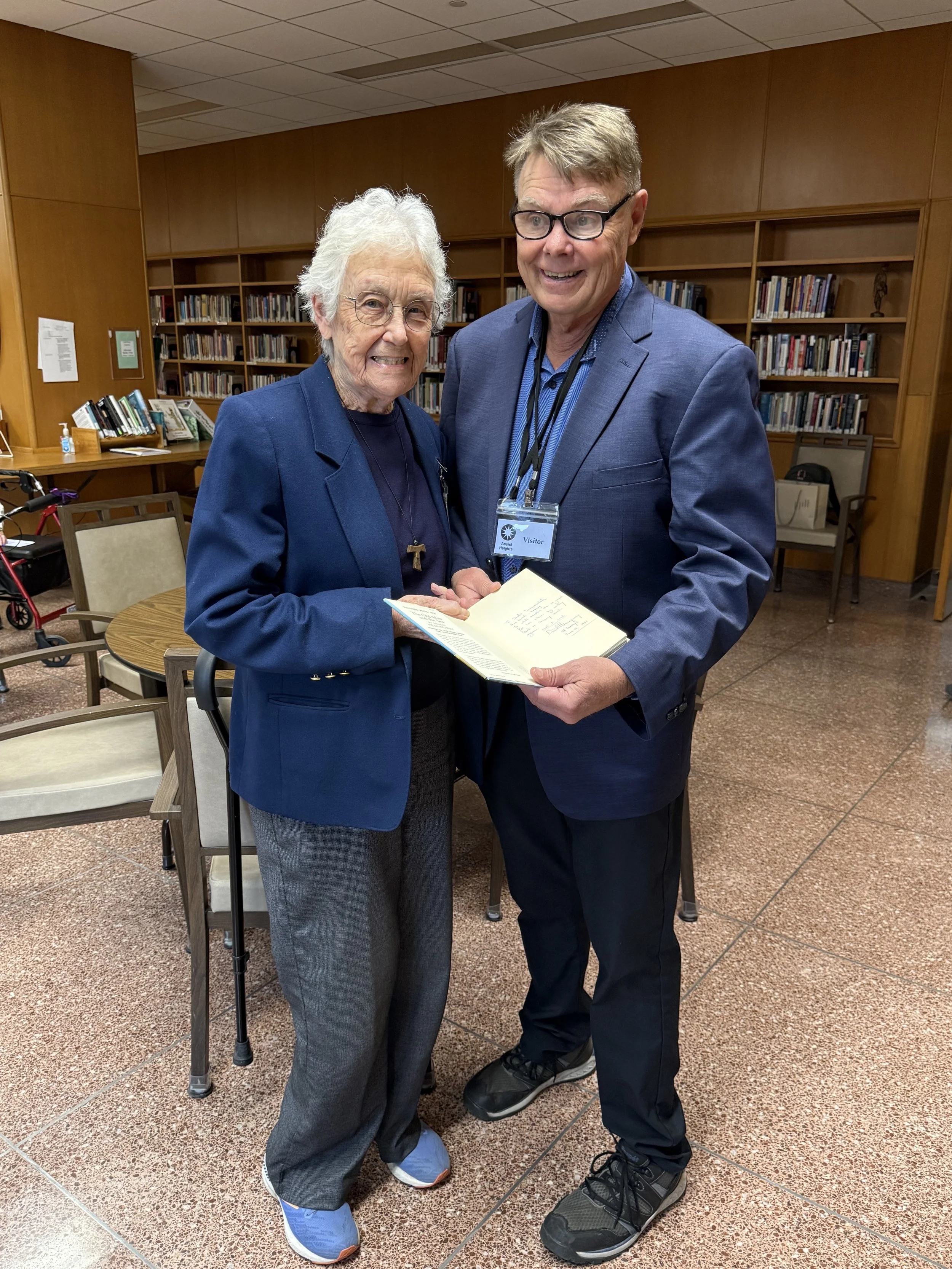
Sister Immaculata, who was born Helen Hayes, on the right, worked and taught at the hospital where Hemingway was a patient. The hospital is part of the larger Mayo Clinic in Rochester, Minn. Credit...Assisi Heights Archives; The Congregational Archives, via Sisters of Saint Francis, Rochester MN
The hospital had been established in 1889 by Mother Alfred Moes, founder of the Rochester Franciscans. It was run by the Franciscan sisters and staffed by their nurses, while the Mayo family — and later staff — physicians provided medical care. The Franciscans turned over administrative authority of the hospital to the Mayo Clinic in 1986 but remain involved in the oversight of Saint Marys through two seats on the Mayo Clinic Values Council.
Sister Immaculata, a trained psychiatric nurse, had helped start the Mayo Clinic’s psychiatric unit and later became a chaplain. She died in 1992.
Sisters who knew her describe her as kind, caring and compassionate, traits Hemingway no doubt observed firsthand. “The fact she went from nursing to chaplaincy says something about her character — her caring, her tenderness and her compassion,” said Sister Tierney Trueman, congregational minister of the Rochester Franciscans.
Sister Immaculata, who was born Helen Hayes, was 37 when she encountered the famous author. By then he had developed a reputation as a braggart and bully, but she seemed to bring out his gentler side, at least in the inscription.
“I think it was very kind and thoughtful of him to say something positive to a person who had cared for him,” said Sandra Spanier, an English professor at Penn State University and editor of the Hemingway Letters Project. “He obviously had a personal connection with her and was fond of her and cared enough about her to write something very personal. It gives insight into the warmth of his character, which isn’t always what he’s known for.”
Hemingway in June 1961 at the home of Edward Rynearson, a Mayo Clinic physician, with two members of the Rynearson family.Credit...Edward Harper Rynearson, M.D./Getty Images
For years, the book with Hemingway’s inscription had been on the shelves of the library of Saint Marys Hospital, where any one of the 100 or so Franciscan sisters who lived there could check it out.
But it appears to have been largely forgotten until five years ago when one of the sisters mentioned it to Curtis DeBerg, a retired business professor who has written a book about Hemingway and was doing research at the Mayo Clinic.
DeBerg wrote “Traveling the World With Hemingway,” which chronicles the peripatetic author’s sojourns through Europe, Africa, the United States and the Caribbean. He is working on another book about Hemingway, “Wrestling With Demons,” as well as a screenplay.
DeBerg said he found the words in the inscription haunting.
“Was he kidding himself, thinking he was going to be able to write again after all those electroshock treatments?” DeBerg said. “Or is he thinking in the back of his mind, ‘I’ll never write another book like this.’?”
DeBerg wonders whether the sunniness of the note was also designed to convince Mayo doctors he was ready for release. Dr. Howard Rome, Mayo’s chief of psychiatry, discharged Hemingway on June 26, 1961, six days before Hemingway shot himself, concluding that his patient “had recovered sufficiently from his depression.”
This past September, after DeBerg toured the Nobel Prize Museum and learned it had no Hemingway artifacts, he suggested the Franciscans donate the book. The order’s leadership council agreed to do so and turned it over to DeBerg in November at their motherhouse in Rochester, Minn.
At the ceremony in Sweden on Friday, DeBerg is scheduled to discuss the inscription’s significance, and a professional actor, Isa Aouifia, will read from “The Old Man and the Sea.”
Larsson, of the museum, said the inscription in the book “captures Hemingway at the end of his life — still hopeful, still writing, still reaching for one more story. It is an intimate piece of literary history, made even more meaningful by the compassion shown by the Franciscan Sisters
Press
November 25, 2025
ROCHESTER, Minn. — In a quiet ceremony at Assisi Heights on Monday, November 24, 2025 a piece of literary history began its final journey home.
For more than 60 years, a modest blue-cloth copy of The Old Man and the Sea has sat in the archives of the Sisters of St. Francis, unbeknownst to the world. Inside the cover is an inscription from the author, Ernest Hemingway, written just days before his death.
Yesterday, the Sisters formally gifted that book to the Nobel Prize Museum in Stockholm, Sweden.
"We cared for Ernest Hemingway during a difficult chapter of his life," said Sister Marisa McDonald, archivist for the Franciscan Sisters, during the presentation. "This inscription reflects the gratitude he felt toward Sister Immaculata. We are honored to ensure it is preserved and shared with the world."
The book’s journey from a bedside at St. Marys Hospital to the home of the Nobel Prize is a story of chance, scholarship, and a 100-year-old nun’s memory.
A Message of Defiant Hope
The book was originally inscribed on June 16, 1961, to Sister Immaculata (born Helen Elizabeth Hayes), a psychiatric nurse supervisor at St. Marys Hospital who cared for the author during his treatment for depression.
Written in a hand weakened by illness, the inscription reads: “To Sister Immaculata — this book, hoping to write another one as good for her when my writing luck is running well again… and it will.”
Hemingway died by suicide just 16 days later.
The artifact remained hidden until May 2021, when Dr. Curtis L. DeBerg, a Hemingway scholar and retired university professor, visited the Mayo Clinic to research his book, Wrestling With Demons. He interviewed Sister Lauren Weinandt, a contemporary of Sister Immaculata who was then 99 years old.
"I asked Sister Lauren if there was anything else she remembered," DeBerg told the Post Bulletin. "She said, 'I think he inscribed a book.' She went into the archives and came back with this."
The Scholar and the Crash
For DeBerg, the discovery was personal. His interest in Hemingway began in 2016 after he survived a serious plane crash in Poland—an event that mirrored Hemingway’s own survival of two plane crashes in Africa in 1954.
"To carry Hemingway’s final written words to Stockholm is more than an academic moment," DeBerg said. "It is a personal one. This book survived decades of silence. Now it will live where it belongs."
DeBerg, who also penned the screenplay The Hemingway Code based on his research, served as the catalyst for the donation. He contacted the Nobel Prize Museum in September 2025, connecting the curators in Stockholm with the Sisters in Rochester.
A "Human Artifact"
The handover ceremony at Assisi Heights was attended by leadership from the Franciscan Sisters and the Mayo Clinic’s W. Bruce Fye Center for the History of Medicine.
Renee Ziemer, History and Heritage Program Manager, helped verify the provenance of the book. "It captures Hemingway at the end of his life—still hopeful, still writing, still reaching for one more story," Ziemer said.